
Some conversations are hard. Even when people are willing to have them, they don’t always know how to approach them effectively. Emotions take over, tone gets misinterpreted, and what was meant to bring people closer does the opposite.
Olivus was built to support those moments.
Olivus is a guided communication platform designed to help people navigate difficult, emotional, or high-stakes conversations. A core part of the experience is access to mental health professionals who can actively facilitate conversations, providing support when users need it most. Combined with structured messaging tools, the platform aims to create space for more effective communication, especially in moments where conversations might otherwise escalate or break down.
But while the product supported people during conversations, it relied on users having an existing support network. This left a gap for users who didn’t have someone to talk to, or who needed help preparing before starting a conversation.
This project explores that gap by designing a way to support users who may not have someone to turn to, as well as those who need help preparing for a conversation.
Founding Product Designer
Figma
Mar 2022 – Jan 2024
Olivus was a pre-seed, early-stage startup preparing for investor pitching while actively developing and testing an MVP.
At the time of my internship, the team had already launched MVP 1.0. It included core functionality such as account creation and onboarding, the ability to invite people into a support network, and a messaging system designed to support healthier conversations featuring tools like pausing conversations and inviting a mental health expert to intervene when needed. These features stood out as a unique approach to communication, shifting the focus from simply messaging to actively supporting how conversations unfold.
A second iteration, MVP 2.0, focused on usability improvements and refining the core experience based on early feedback.
My project was explored after these MVPs as part of expanding the product’s feature set and overall value proposition, specifically addressing gaps not covered by the existing experience.


After the initial MVPs launched, we identified a gap in how support was structured.


The product as it stood did not account for users who didn’t have a reliable support network, weren’t yet ready to involve another person, or simply didn’t know how to begin a difficult conversation. While the platform supported people during conversations, it did not yet support what happens before a conversation begins, when users are still processing their thoughts or trying to figure out how to express them.
I began questioning what the experience looked like for users without a therapist or a strong support network.Instead of focusing on improving live conversations, this led me to explore how Olivus could support users independently, especially those who were anxious about conflict, unsure how to express themselves, or needed help preparing before involving another person.
To understand this space, I conducted research into communication challenges in chat-based environments, including desk research, competitive analysis, a survey with over 25 responses, and user interviews. I synthesized these findings into patterns around emotional hesitation, communication breakdown, and lack of confidence in initiating conversations.
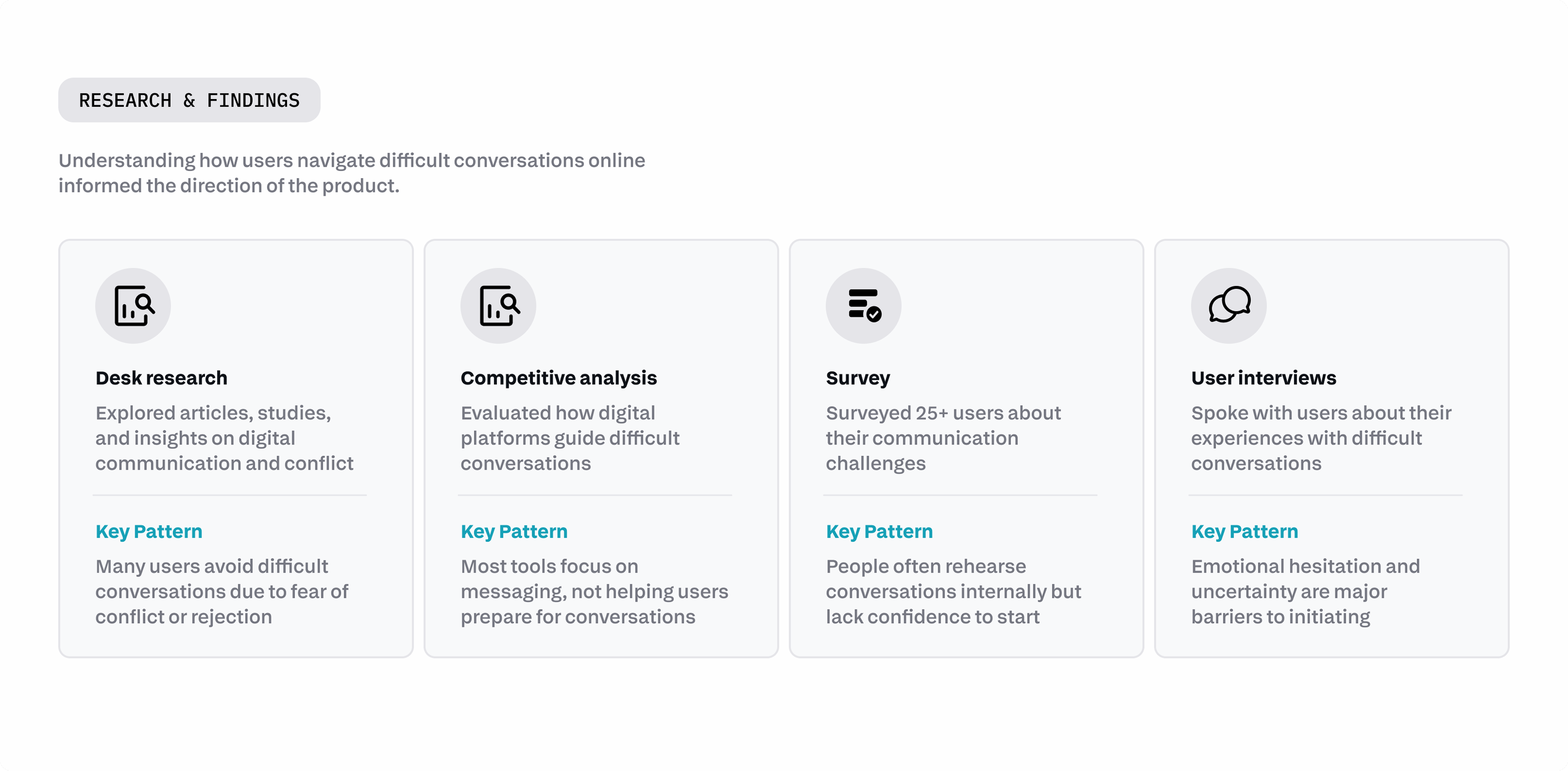

This insight led to the concept of Communication Guides.

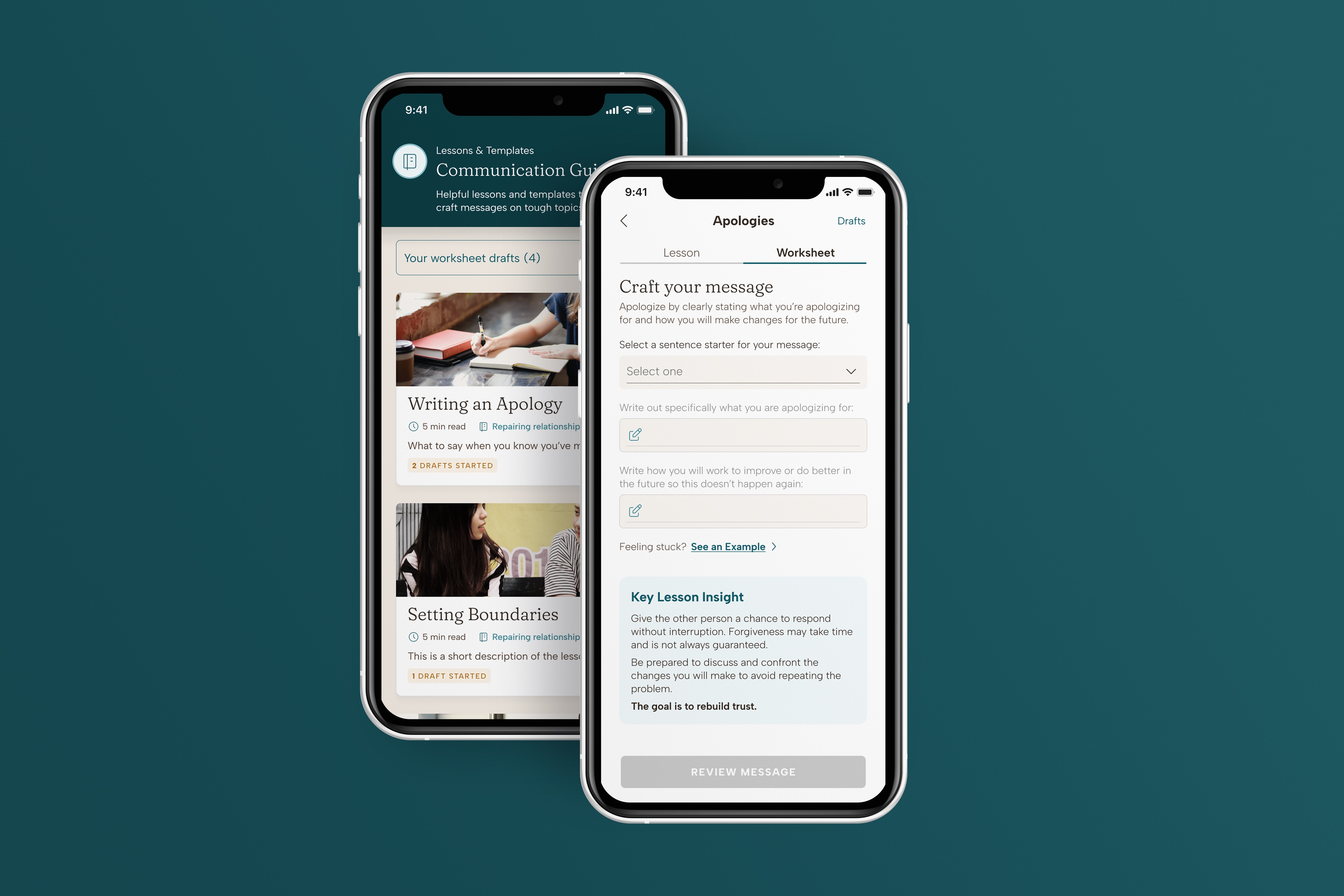
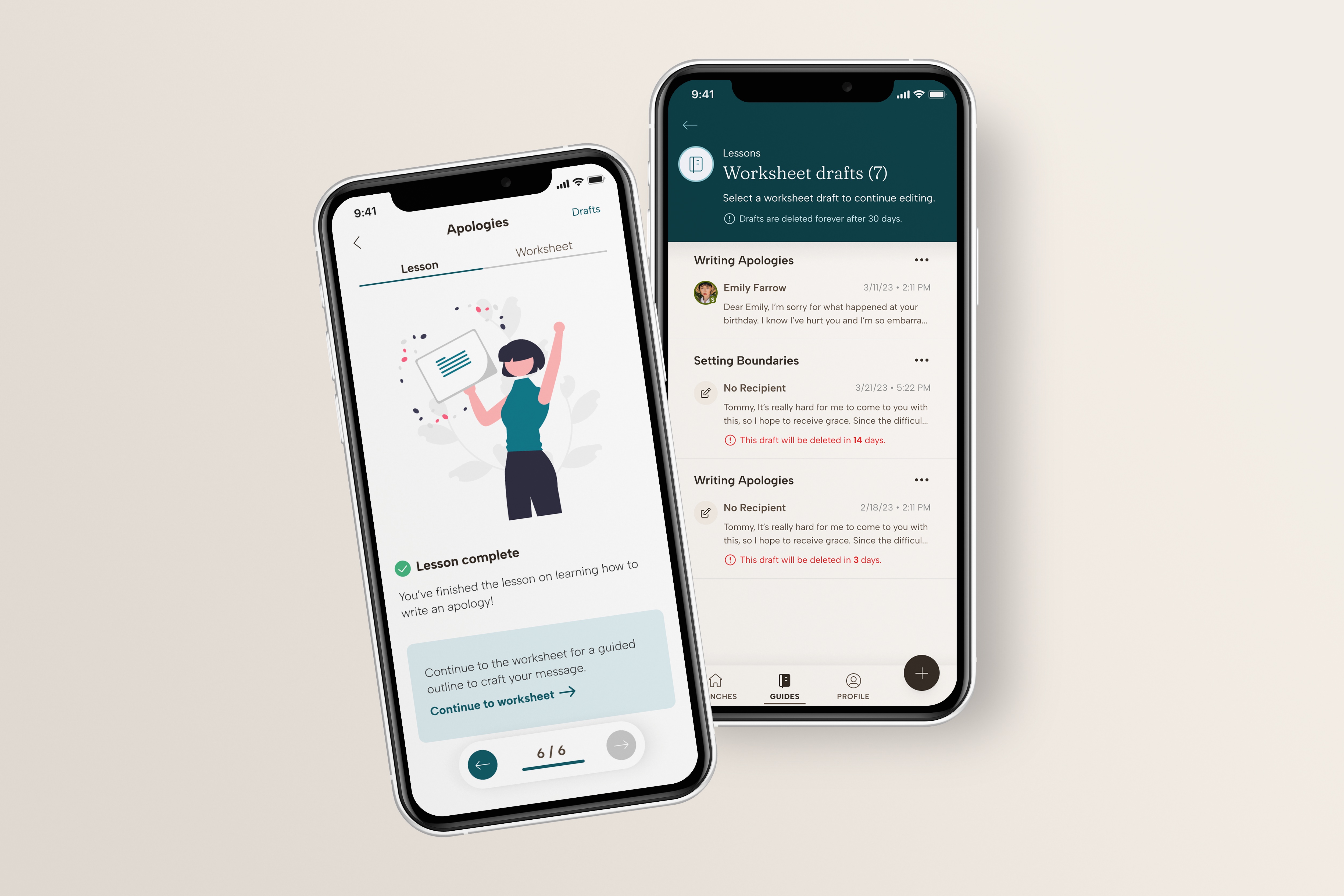
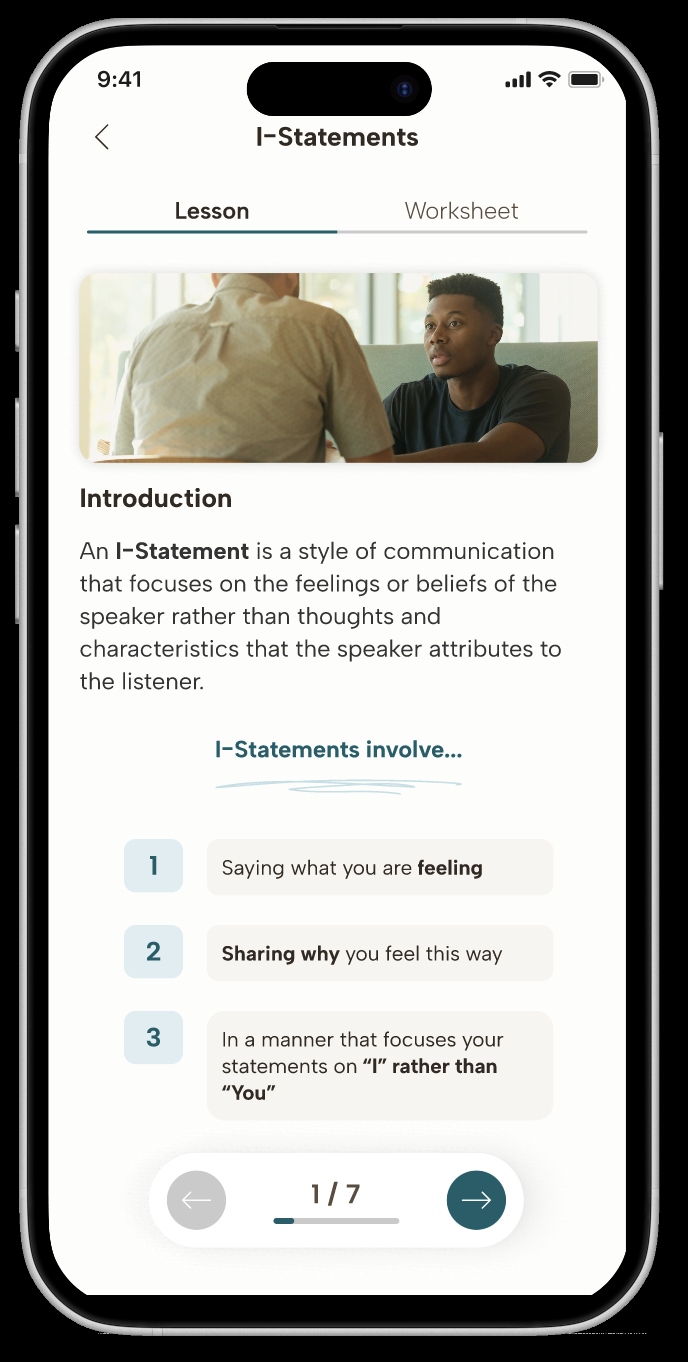
Communication Guides introduced a self-guided experience within Olivus, allowing users to work through structured lessons and reflective worksheets independently. The goal was to help users process emotions, organize their thoughts, and prepare for conversations before involving another person.This shifted Olivus from supporting conversations in real time to supporting the broader communication journey, including what happens before a conversation begins.The feature was designed and prototyped, but not developed, as the team remained focused on refining the core MVP and preparing for investor pitching.

Unstructured input with no guidance for message creation.

Unstructured input with no guidance for message creation.

Unstructured input with no guidance for message creation.
I explored how users would move through the guides and how the lesson and worksheet would work together. One key decision was replacing a blank input with a guided, form-like structure.
Based on SME feedback, I reinforced this approach because conflict-averse users often need reassurance and structure when expressing difficult messages. This resulted in a step-by-step worksheet that helped users build messages with clarity and confidence.
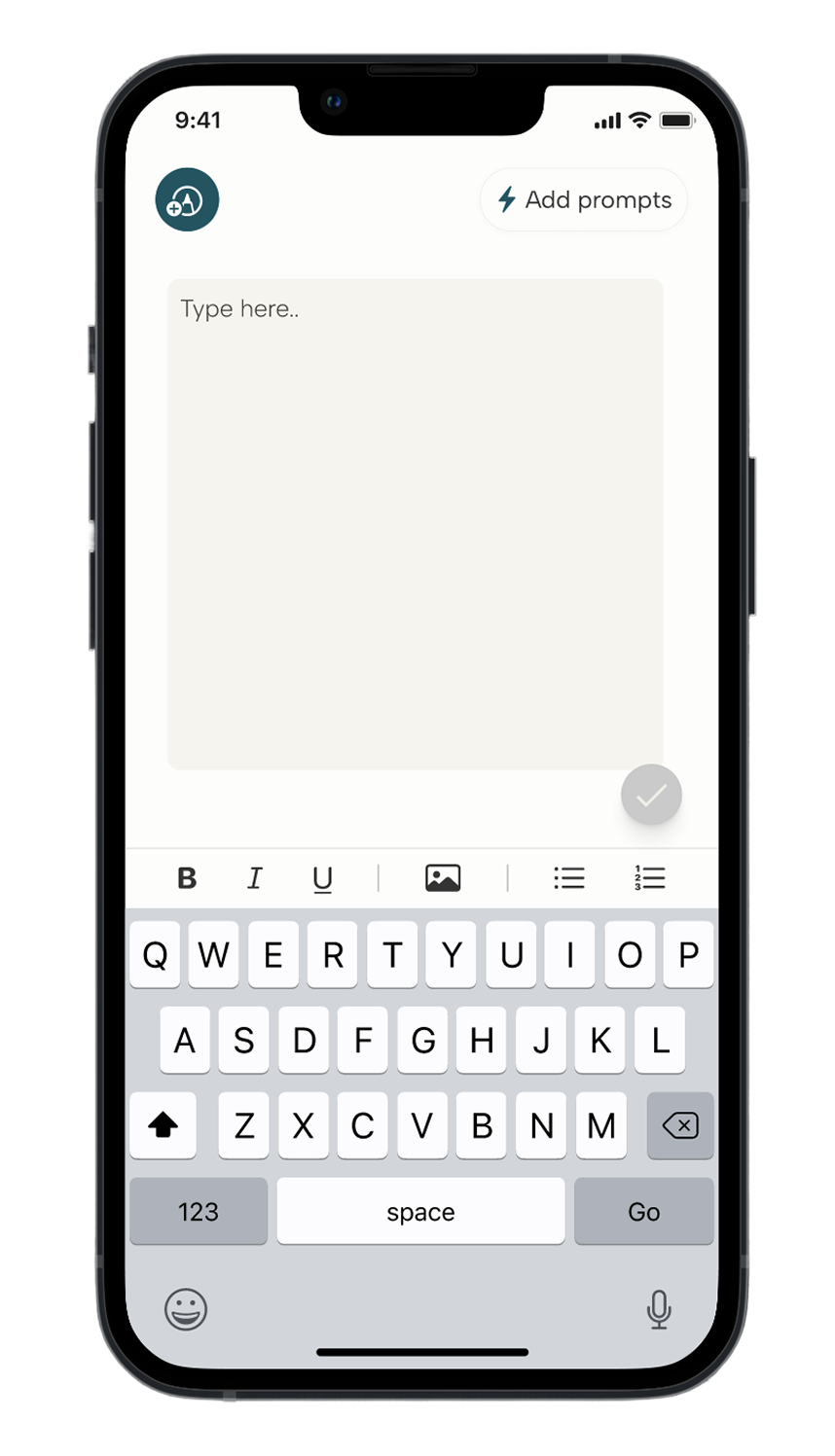
Unstructured input with no guidance for message creation.
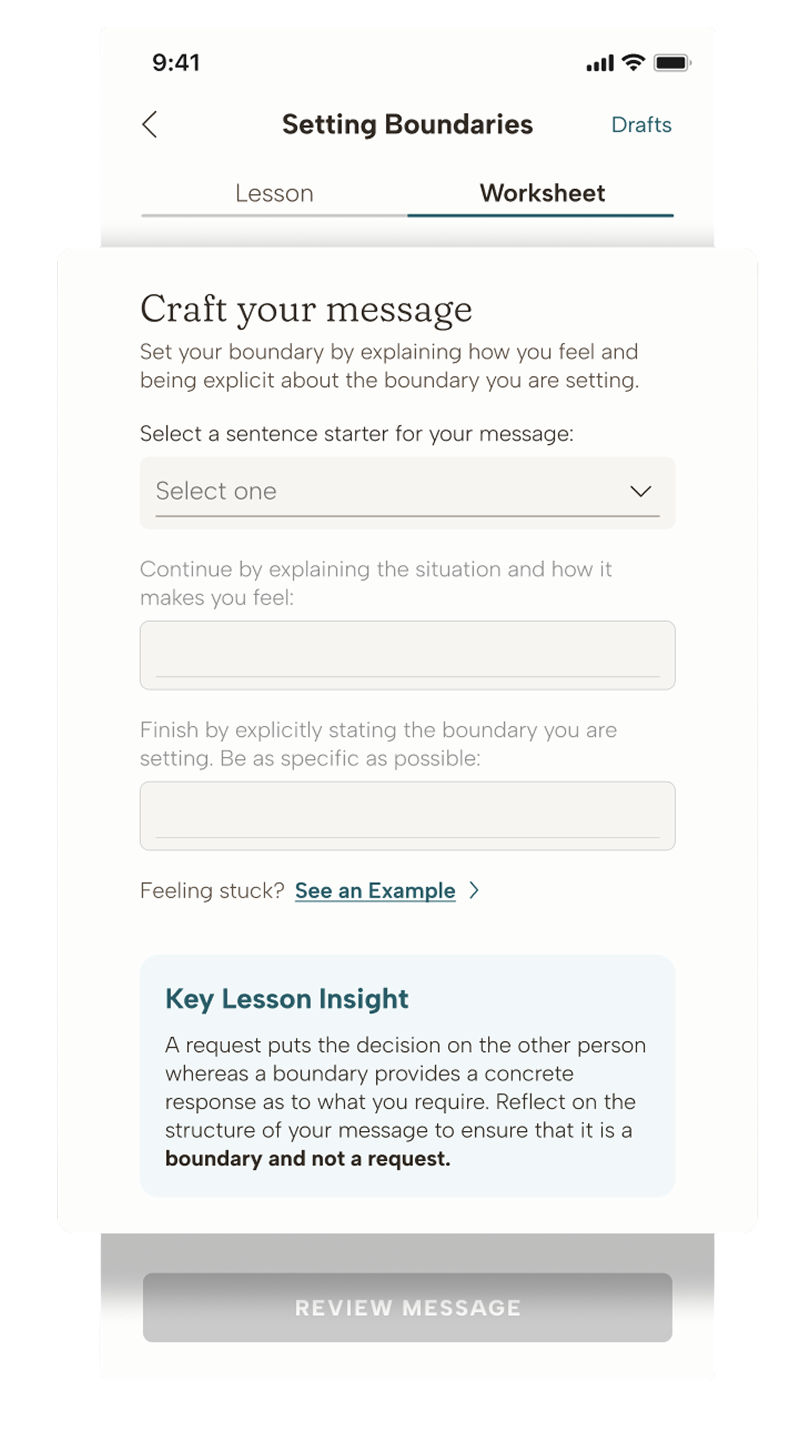
Guided step-by-step worksheet with embedded prompts for clarity.
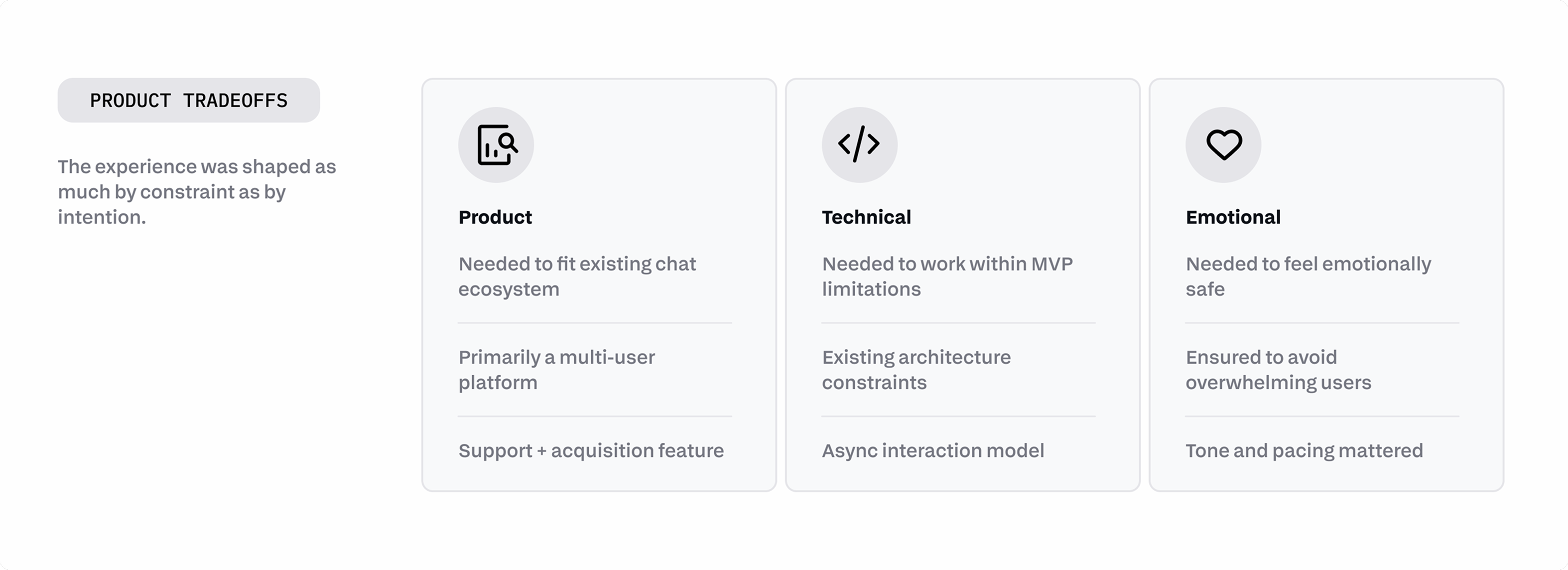
The final experience of Communication Guides was shaped by several layers of constraint: product, technical, and emotional.
From a product perspective, Olivus was still an early stage startup with MVP already launched, which meant new features had to align with the existing platform and its core value proposition. The Communication Guides needed to make sense within a chat-based app where most features involved two or more people, while this feature would be primarily asynchronous and used individually. It also needed to support the business goal of attracting users who did not yet have access to a therapist, making it both a user support feature and potential marketing feature.
From a technical perspective, some of the most complex design decisions came from things that seem simple on the surface, such as saving worksheets. Early ideas included autosave and long term draft storage, but these had technical implications the team could not support at the time.
We had to make decisions such as requiring manual saving and automatically deleting drafts after a set period. Interestingly, this decision was not only technical but also influenced by our SME, who advised that keeping drafts forever might encourage avoidance rather than action. As a result, the product decision was to delete drafts after 30 days to gently encourage users to eventually send the message they were drafting,

From a technical perspective, some of the most complex design decisions came from things that seem simple on the surface, such as saving worksheets. Early ideas included autosave and long term draft storage, but these had technical implications the team could not support at the time.
We had to make decisions such as requiring manual saving and automatically deleting drafts after a set period. Interestingly, this decision was not only technical but also influenced by our SME, who advised that keeping drafts forever might encourage avoidance rather than action. As a result, the product decision was to delete drafts after 30 days to gently encourage users to eventually send the message they were drafting,
This project expanded how Olivus could support users beyond live, moderated conversations, introducing the idea of pre-conversation guidance as part of the core experience.
Instead of focusing solely on facilitating communication in the moment, Communication Guides positioned the platform as a tool that also helps users prepare for difficult conversations, reflect on their thoughts, and build confidence before engaging with others.
This shift broadened the product direction from a real-time communication tool into a more holistic communication support system that could serve users before, during, and after emotionally challenging interactions.
Direction was validated through stakeholder and SME feedback. Next steps would include usability testing to evaluate how effectively users can move from reflection to a drafted message.
If developed, the feature would have represented a shift from Olivus being purely a facilitated communication tool to a broader communication support platform that guided users before, during, and after difficult conversations.