
Recovering from an injury doesn’t happen in a clinic. Most of it happens at home, at the gym, or at work, in the moments where patients have to decide for themselves whether to push forward or pull back.
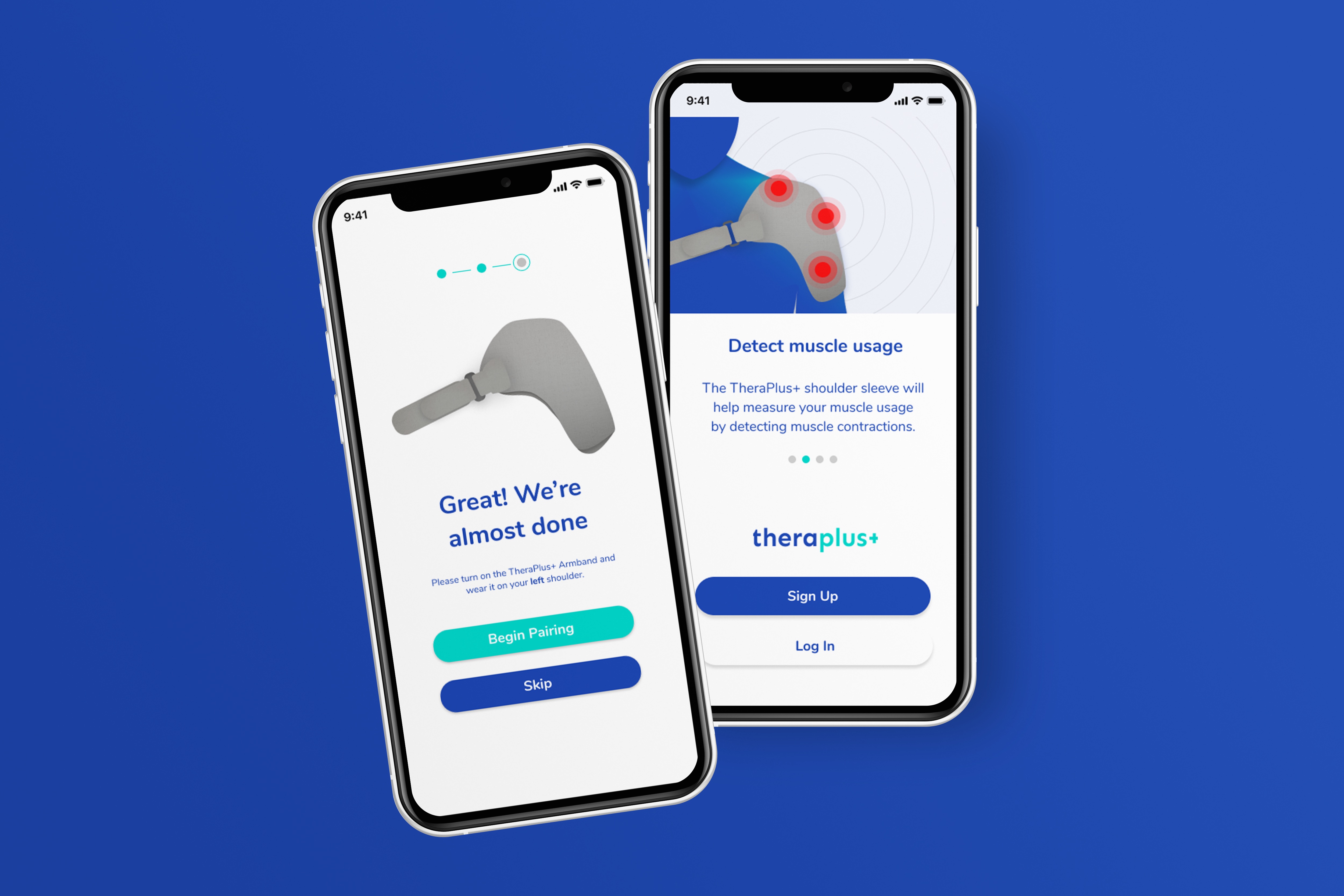
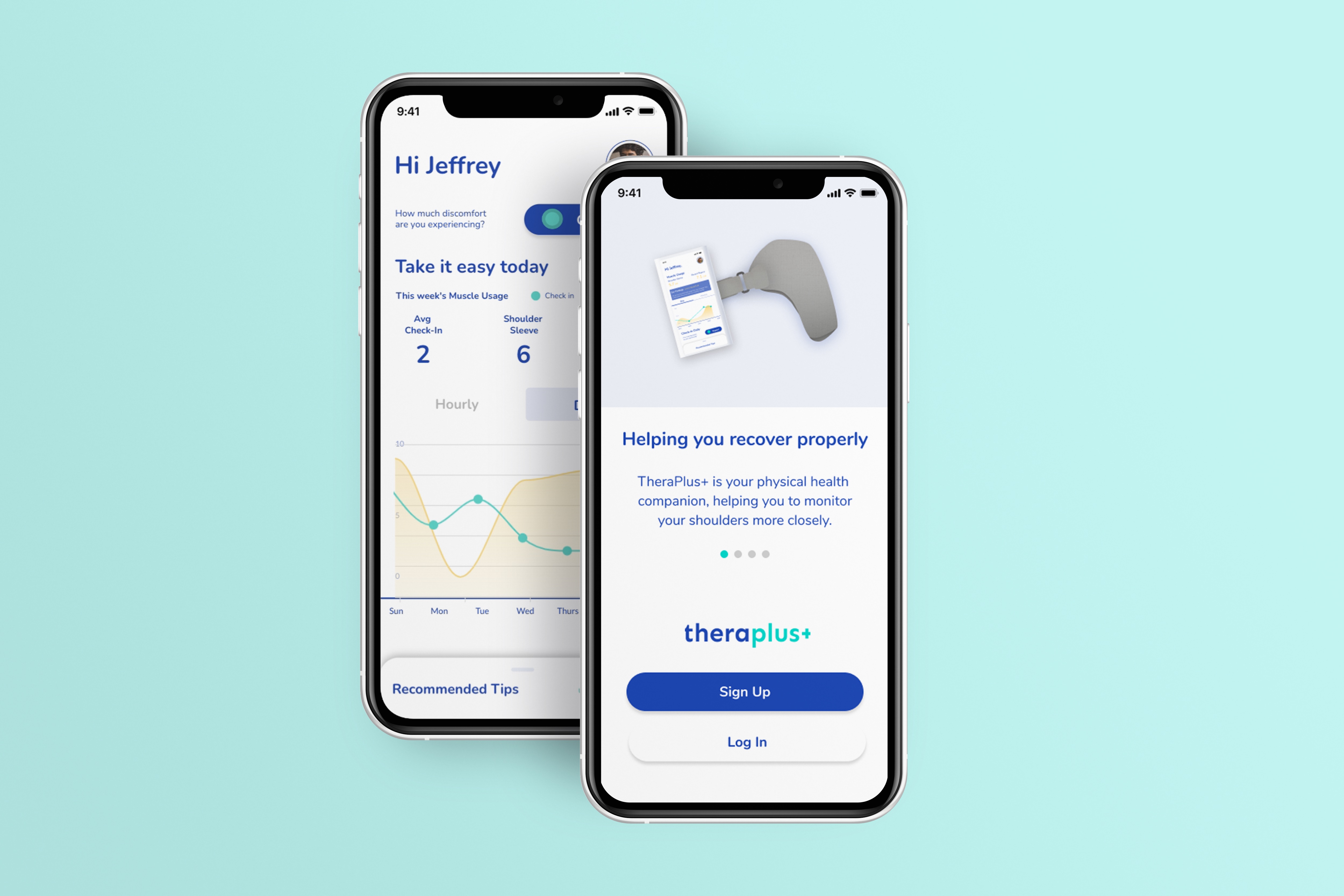
Theraplus+ is a health management concept that combines a shoulder wearable and a mobile app to help individuals monitor muscle strain, track recovery, and receive personalized guidance.
Rather than replacing physiotherapy, we focused on a different question:
How might we help people make better recovery decisions when they don’t have access to continuous professional care?
Designed as a companion system, the goal was to help users understand their physical limits, recognize patterns in their recovery, and adjust their behaviour over time.
Product Designer
Figma
Feb – May 2021
Through research and personal experience, we learned that recovery isn’t just about doing exercises, it’s about doing the right amount at the right time.
Patients are often told to increase intensity gradually, stay active without overexerting, and rest when needed. But outside of physiotherapy appointments, they lack the feedback to know whether they’re doing this correctly.This uncertainty can lead to two common outcomes:
At the same time, physiotherapy can be expensive and time consuming, meaning many patients only see their physiotherapist occasionally.
The gap we identified wasn’t treatment, it was the lack of feedback between treatments.
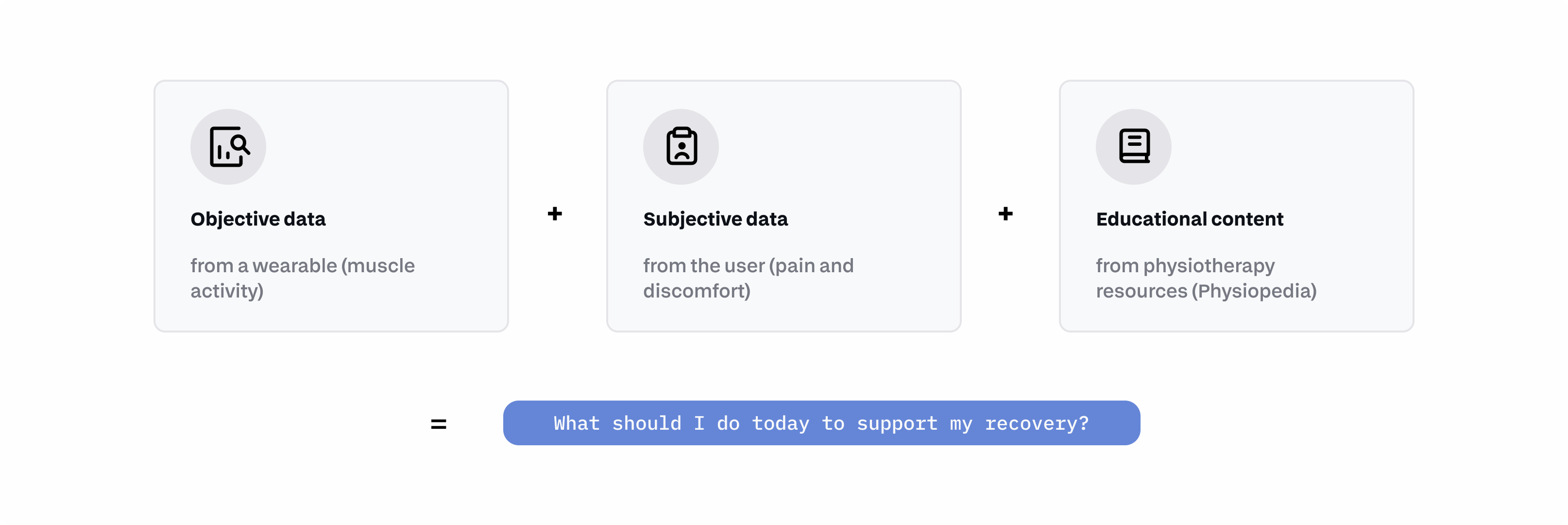
We explored how combining wearable data, self-reported pain, and physiotherapy guidance could support more informed recovery decisions. Together, this could help users answer a simple but critical question: “What should I do today to support my recovery?”
This insight shifted our direction from designing a tracking app to designing a decision support system.
We spoke with people recovering from shoulder injuries across very different lifestyles, including athletes, manual workers, and active individuals.
While their contexts varied, their constraints shaped how they approached recovery:
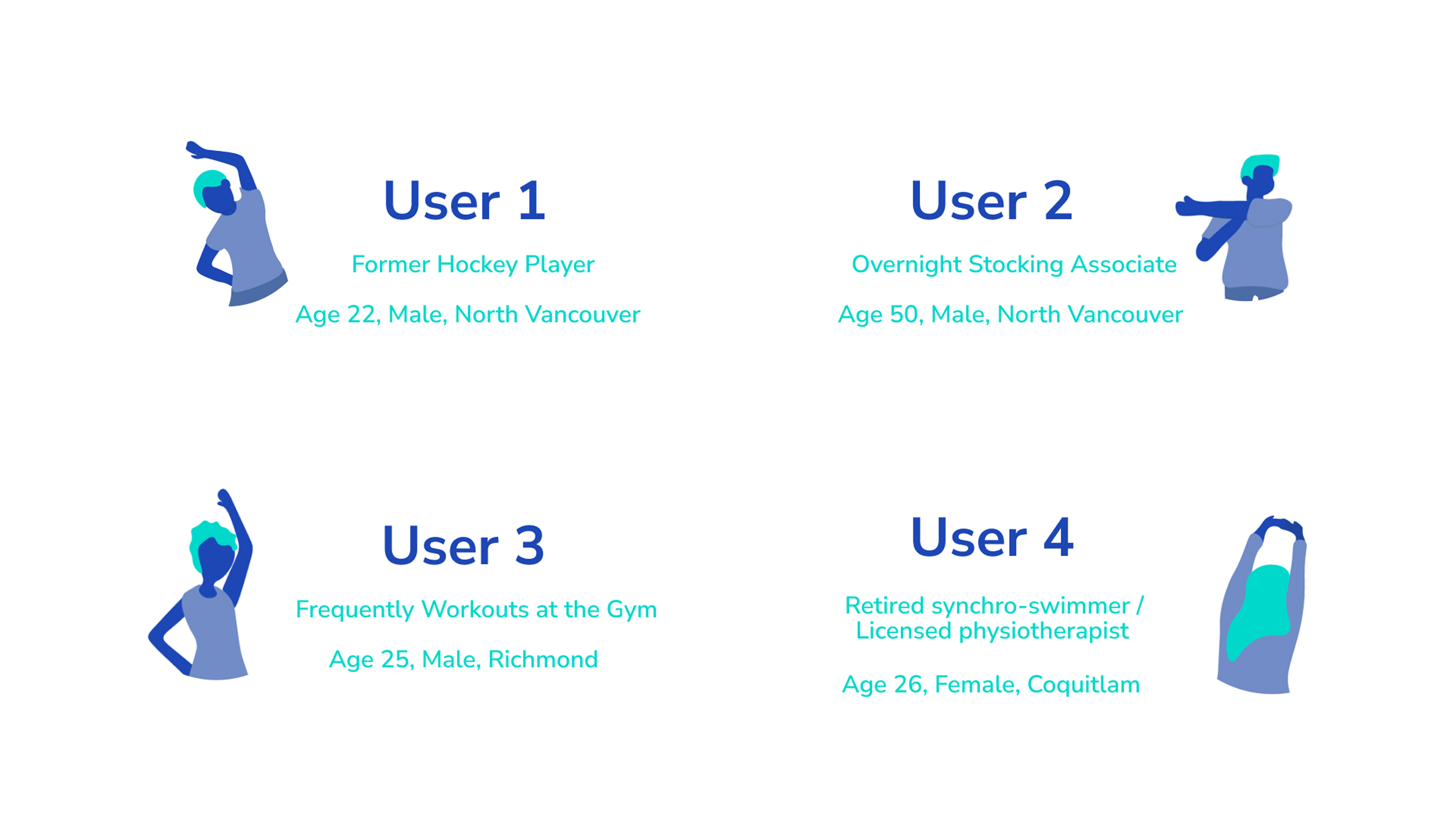
While their circumstances varied, their recovery decisions were shaped by the same challenge: understanding their physical limits safely.
This insight shaped the core experience of Theraplus+ not as isolated features, but as a continuous recovery loop.
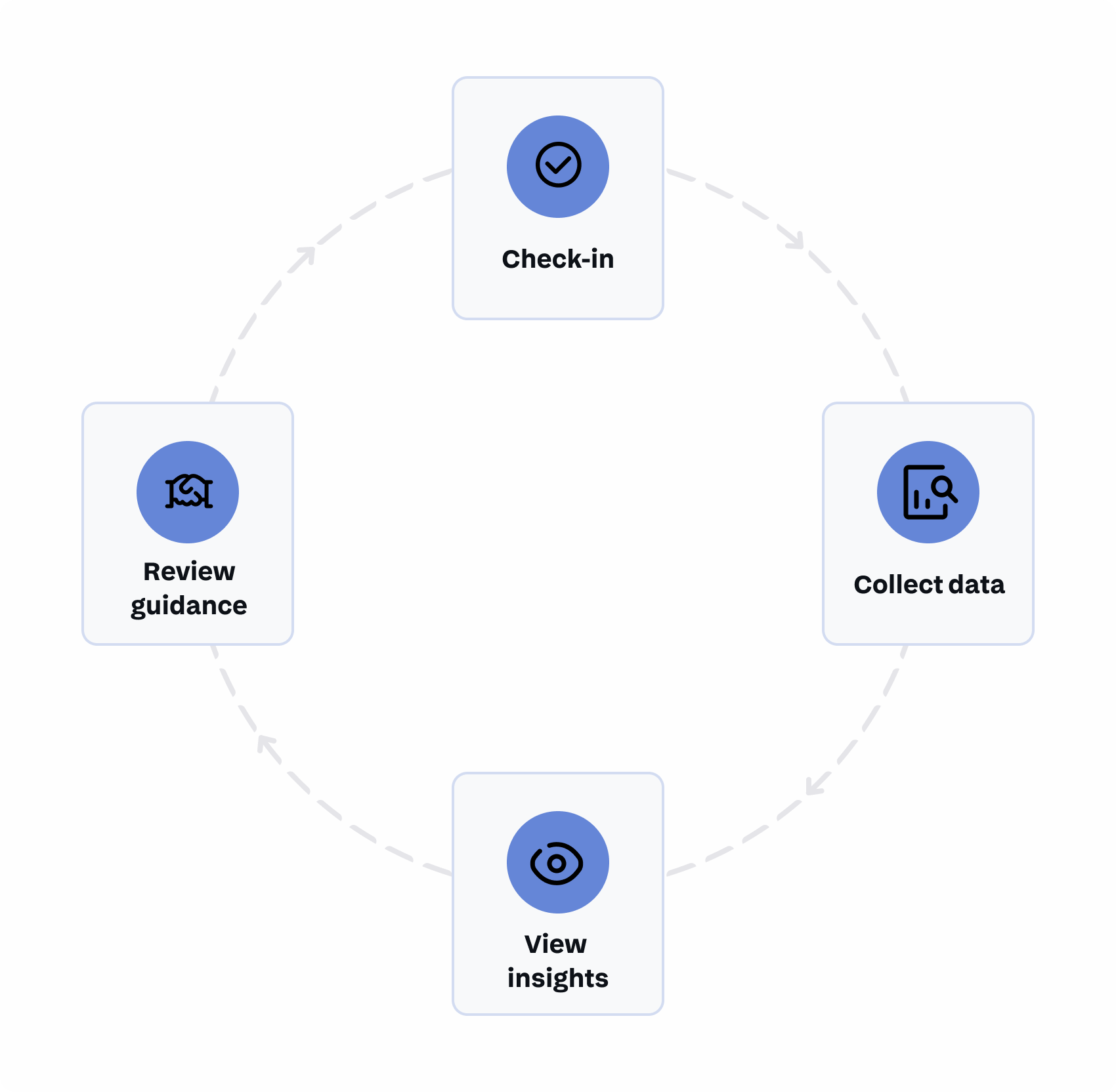
Instead of thinking in features, we designed around behaviour. Recovery isn’t a one time interaction, it’s a continuous process. We mapped the core experience as a simple loop. This loop guided our design decisions:
The goal wasn’t just to inform users, but to help them build awareness and make better decisions over time.
To support this recovery loop, we designed a mobile experience that integrates a shoulder sleeve that measures muscle activity using electromyography (EMG) sensors with user input to create a continuous feedback system.
My work focused on designing the core user flows that translate data into meaningful, actionable guidance.


During usability testing, we discovered that users didn’t just want to track their recovery, they wanted help interpreting it.

This became a turning point in the project. We realized the value of Theraplus+ wasn’t in the data itself, but in helping users understand what to do with it.
While our prototype demonstrated how data could be collected and displayed, the next step was to define how the system could generate more meaningful, personalized guidance.
We explored how combining muscle load data and pain check-ins could inform different types of recommendations, helping users understand not just their condition, but what actions to take next. In shaping this direction, I focused on how this logic could translate into clear, user-facing guidance, ensuring recommendations felt actionable without overwhelming users with technical detail.
This would move Theraplus+ closer to becoming a true recovery guidance system, rather than simply a monitoring tool.